
Hello Friends,
And happy Monday!
We always feel like we do not have enough time.
But it feels like the more time we have, the less efficiently we use it (if we use it at all).
I know that I have rarely used time more efficiently than now that I have none. While when it felt like I had all the time in the world, I largely wasted it.
I really enjoyed this first essay because it summarises the situation quite well:
A Lack of Time is a Lack of Priorities 4min
You have all the time in the world to do what’s important. - Importance vs. Urgency
Don’t have the time? Then drop something else to make the time.
Or, accept that it’s not important enough and move on.
Or, accept that you’ll voluntarily be busy for the next little while; that it’s a choice, not a burden.
Our second essay should not exist.
Or at least no one should feel the need to read it.
But, as obvious as it is, it still feels we would all level up if we were applying its basic principles in the moment.
Don’t you think so?
One thing, now 4min
In the end, the only point of any personal productivity system, goal-setting technique or "life planning" exercise is to help you make a slightly better decision about what to do, right now, so you can mentally put everything else to one side for the time being and immerse yourself in that one thing. Which explains the extraordinary efficacy of a method that's so embarrassingly simple I hesitate to mention it, but which never fails to deliver me from procrastination or grouchiness to clarity:
Think of something it would be worthwhile to do right now, without any expectation that you know what might be "best". (And don't forget that it could be "take a nap"!)
Write it down.
Do that thing.
Cross it out.
Go back to 1., writing the next thing underneath the one you just crossed out. Repeat (forever).
And just to spell it out: the point here isn't "stop multitasking and focus on one thing, and you're a bad person if you don't!" Rather, it's that (with a few technical exceptions) you never actually are multitasking to begin with. Instead, you're just anxiously switching your attention rapidly between things – because you're not sure which one's more urgent, and/or because you think you'll get them done quicker that way, which is almost never true.
The last essay is full of growth.
The author managed to convey the exact feelings we all have when the “procrastination” feeling sets in.
But he also manages to convey the reasons why we should all embrace this challenge and push beyond it.
A must-read:
The truth about distraction 5min
Meaningful work stretches you, bringing you up against the edge of your talent.
It’s a relief to turn from the unpleasantness of a challenging work task, or a moment of boredom while caring for a child, to scroll through your phone instead.
This is why most anti-distraction hacks – web-blocking apps, noise-canceling headphones, personal rules – never seem to work very well.
They involve denying yourself access to the places you usually go for relief from emotional unpleasantness. But they don’t address the unpleasantness itself.
They’re not entirely useless. But if you can’t bear the fact that a given activity causes discomfort, shutting down Twitter won’t solve that problem. You’ll just find something else to do (stare out of the window, go and get a snack) to avoid the unpleasantness instead.
Mild discomfort might simply be the price of doing things you care about.
I’m constantly amazed at how low the threshold is, for me – how just a tiny feeling of being challenged or tired or bored, while doing something I really want to do, is enough for me to leap eagerly away to fritter an hour on social media instead.
(Severe discomfort, on the other hand, may be a sign you’re engaged in the wrong task.)
Whenever I’m able to recall that the urge to distract myself can be observed without being acted upon, the effect is quasi-magical: “Oh, right! I remember now! Important stuff sometimes just feels difficult!”
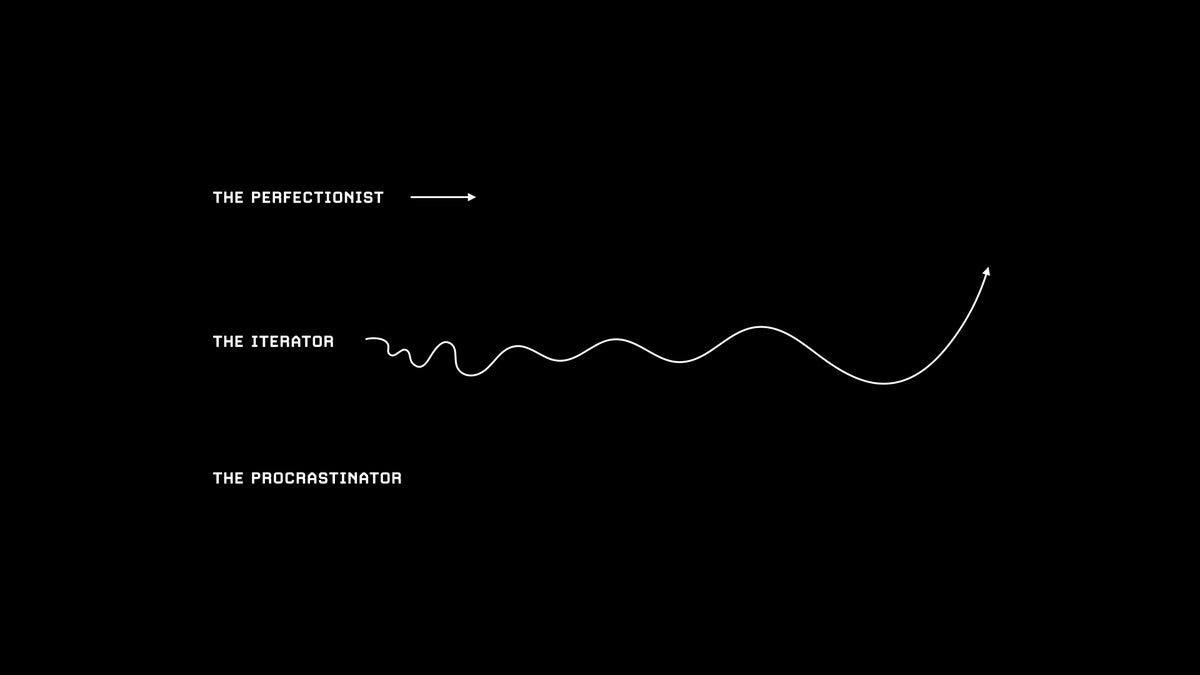
Finally, a thoughtful design by Jack Butcher:
Don’t forget to send me your thoughts, questions, or feedback. I read everything.
Thanks for reading, and have a productive week ahead,
V